Not All Roofs Are Equal: Climate In The World Cup's Indoor Stadiums
Three climate-controlled venues, with different experiences for players. Dallas in particular is not what most people would expect.
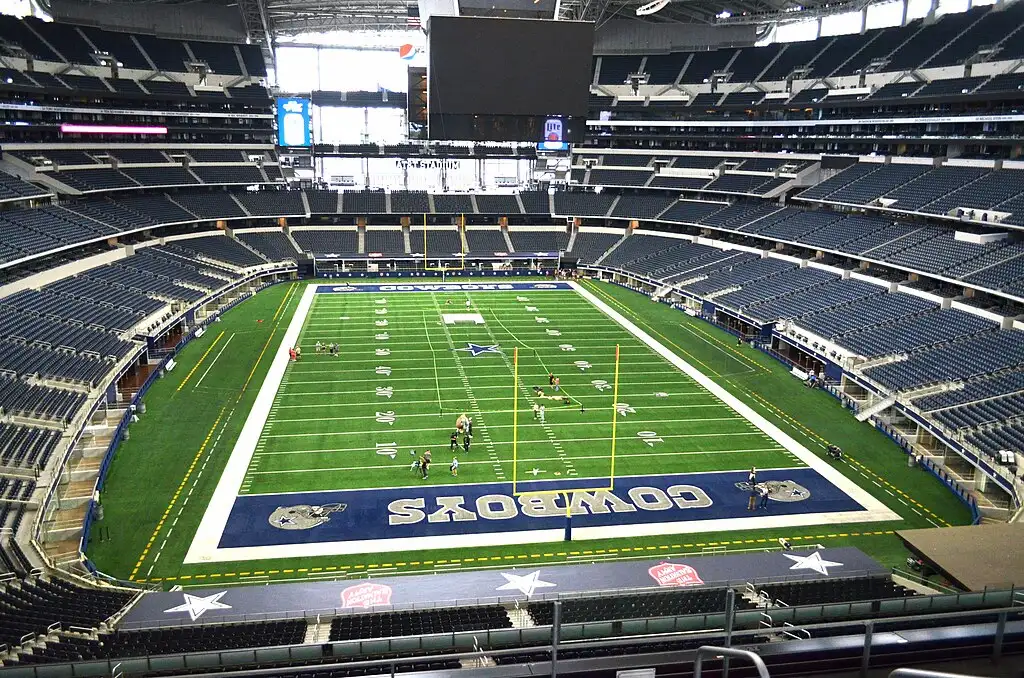
Image credit: Image credit: edwarddallas / PDM 1.0
When fans hear that a World Cup match is being played indoors, the natural assumption is that heat is no longer a factor. For two of the three climate-controlled venues at this summer's tournament, that assumption is broadly correct. For the third, it is not.
AT&T Stadium, Dallas — Indoor But Not Immune
Dallas (pictured above) is the one that catches people out. The air conditioning does keep the interior temperature at a manageable level for spectators, but playing on the pitch is a different experience entirely.
The stadium's defining architectural feature — vast glass panels across the endzone walls — is also its problem. When the roof is closed, the Texas sun beams directly through the glass and onto the field, creating a greenhouse effect at pitch level. Radiant heat and sun glare bear down on players even when the ambient air temperature is under control. The heavy humidity of a Dallas summer compounds this further, with the AC unable to fully neutralise it. Players running for ninety-plus minutes generate significant internal body heat that the indoor environment can only do so much to manage.
FIFA will deploy the stadium's blackout curtains for just one match — the June 25th group stage fixture between Japan and Sweden, when the late afternoon sun hits the west-facing glass at its most direct angle. The other eight matches at the venue kick off either before that window or after sunset, leaving the curtains unused.
The decision to lower them at all has not gone unnoticed locally. Dallas Cowboys fans have watched Jerry Jones refuse to use those same curtains for NFL games for years, on the grounds that the sunlight is part of the stadium's character and a home-field advantage. A World Cup warrants different standards.
Mercedes-Benz Stadium, Atlanta — The Gold Standard

Image credit: Eric.Jason.Cross / CC BY-SA 4.0
Atlanta sits at the other end of the spectrum. Mercedes aren't going to mess about, the retractable roof is made of 8 massive trangular 'petal' panels, and when the roof closes they overlap to resemble the three-pointed star Mercedes logo. The stadium is widely regarded as one of the most comfortable sports venues in the world and the setup backs that up. A 9,500-ton central cooling plant maintains a steady 20°C on the grass surface. The retractable roof blocks direct overhead sunlight completely when closed, eliminating the radiant heat issue that afflicts Dallas. Temperature is consistent across every inch of the playing surface, airflow is predictable and there are no pockets of trapped heat or sudden drafts. For players, it is about as controlled an environment as the sport offers.
As a side note, if Germany win their group as expected they won't get to take advantage of their compatriots named stadium with superior engineering. If they come 2nd in their group, they'll play the semi-final at the venue.
Checkout MyTourneyTime's Route-26 tool to see all teams routes to the final based on their group finish position. MyTourneyTime Route-26

As an Amazon Associate, MyTourneyTime earns from qualifying purchases.
NRG Stadium, Houston — The Sealed Dome
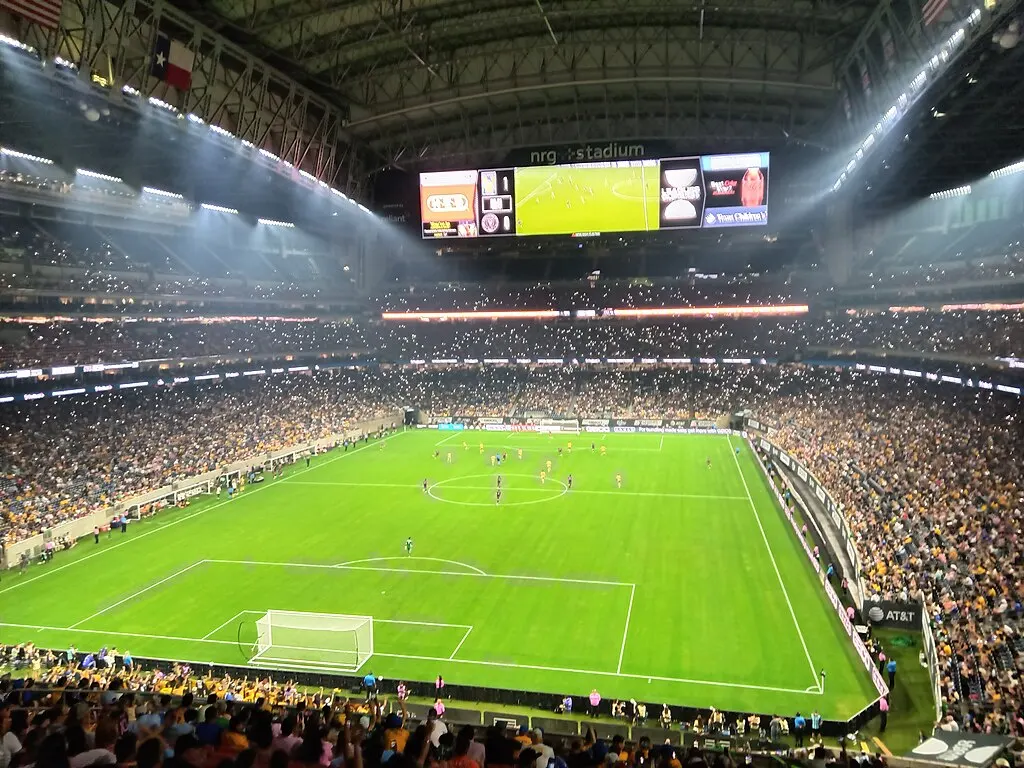
Image credit: Image credit: Gradias / CC0 1.0
Houston presents a different proposition again. NRG Stadium was engineered from the outset to function as a sealed dome in extreme heat, which makes it highly effective at isolating players from Texas's punishing summer climate. The air conditioning is powerful, the pitch feels cool, dry and well-oxygenated, and external conditions become largely irrelevant once the doors close.
The trade-off is the environment it creates. The dome effect is total — which is comfortable, but produces a playing atmosphere quite unlike anything in the outdoor game. Several players have described the experience as playing inside a large, heavily air-filtered convention centre. The indoor venues have taken many a player by surprise, often describing the surprise of how cold it is before the stadium starts to fill.
They maybe preferable to a midday in Miami, but they bring their own challenges.
Checkback For Our Feature Climate Routes
How all sixteen host venues compare — and which nations face the most punishing or most favourable routes through the draw based on where and when they play — will be the subject of our venue difficulty feature, coming tomorrow. It will grade the physical toll each stadium is likely to take on the teams playing there.
Never has 1 World Cup been played over such an expanse, teams will feel the heat. Given the different routes, some more than others.
Try The Tools
The Ultimate World Cup Quiz ⚽
Explore MyTourneyTime's World Cup tools, routes, fixtures and tournament views in one place.
Read Next
Feature: Climate Knockout Crisis World Cup ’26
Major advantages lie ahead for those on the right route. Use our climate chart to see which teams benefit.